How Do You Practice Mindfulness Meditation?
People often ask, how do you practice mindfulness meditation or mindfulness meditation how to do it correctly? Here’s a simple approach:
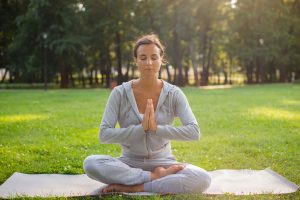
- Sit comfortably with a straight spine.
- Close your eyes gently or lower your gaze.
- Focus on your breathing in and out.
- When thoughts show up, notice them and return to your breath.
If you’re wondering how to do mindfulness meditation, remember that consistency matters more than perfection. Even 5–10 minutes daily can make a difference.
Mindfulness Meditation for Beginners
Mindfulness meditation for beginners should be simple and pressure-free. Start with short sessions and build gradually. Use guided audios, apps, or breathing cues. Beginners benefit most from focusing attention on sensations like the breath entering and leaving the nose. You can also explore basic meditation techniques to stay consistent and build awareness over time.
A 2020 study in JAMA Internal Medicine found that beginners practicing mindfulness meditation for just 10 minutes daily showed a 15% improvement in focus and reduced stress markers.
Meditation-Based Stress Reduction
Meditation based stress reduction is one of the most researched benefits of this practice. Mindfulness-Based Stress Reduction (MBSR), created by Dr. Kabat-Zinn, is used in hospitals and therapy settings.
Research published by the American Psychological Association found that MBSR reduces anxiety symptoms by up to 25%. Practicing mindfulness meditation daily helps regulate cortisol, the body’s main stress hormone.
If stress is overwhelming, meditation based stress reduction can be a powerful and natural tool.Many pair it with holistic practices such as reiki for deeper relaxation and energetic healing.
Mindfulness Meditation for Anxiety
Mindfulness meditation for anxiety helps calm the nervous system by grounding awareness in the body. Instead of spiraling into “what-if” thoughts, it brings you back to the moment. Harvard studies show that regular mindfulness practice decreases activity in the amygdala, the brain’s fear center.
People often use mindfulness meditation for anxiety to manage tension, panic, and overthinking. It teaches you to observe emotions without reacting instantly.
10-Minute Mindfulness Meditation
A 10 minute mindfulness meditation session is ideal for busy schedules. You can practice it in the morning, during a break, or before bed.
Quick routine:
- Set a timer for 10 minutes.
- Focus on the breath or body sensations.
- Let thoughts pass without engagement.
Even a short 10 minute mindfulness meditation can reset your mood, improve clarity, and reduce stress. Many people also integrate yoga with mindfulness to enhance body-mind awareness and relaxation.
Key Takeaways
- Mindfulness meditation is simple and beginner-friendly.
- It supports meditation based stress reduction and emotional balance.
- Practicing mindfulness meditation for anxiety reduces worry and tension.
- A consistent 10 minute mindfulness meditation routine can transform your mood and mental clarity.
If you’re unsure how to do mindfulness meditation, start with breathing awareness and short timed sessions.